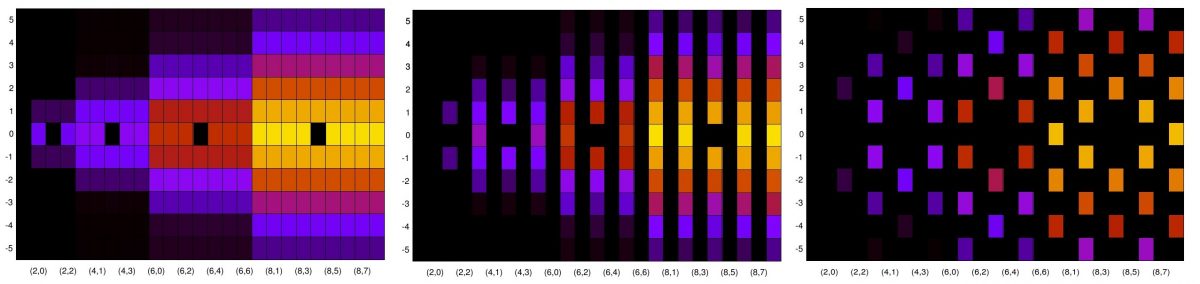
Are Probability Density Functions “Engineered” or “Hand-Crafted” Features?

The Machine Learners think that their “feature engineering” (rooting around in voluminous data) is the same as “features” in mathematically derived signal-processing algorithms. I take a lighthearted look.

One of the things the machine learners never tire of saying is that their neural-network approach to classification is superior to previous methods because, in part, those older methods use hand-crafted features. They put it in different ways, but somewhere in the introductory section of a machine-learning modulation-recognition paper (ML/MR), you’ll likely see the claim. You can look through the ML/MR papers I’ve cited in The Literature ([R133]-[R146]) if you are curious, but I’ll extract a couple here just to illustrate the idea.

Continue reading “Are Probability Density Functions “Engineered” or “Hand-Crafted” Features?”

Stationary Signal Models Versus Cyclostationary Signal Models

What happens when a cyclostationary time-series is treated as if it were stationary?

In this post let’s consider the difference between modeling a communication signal as stationary or as cyclostationary.

There are two contexts for this kind of issue. The first is when someone recognizes that a particular signal model is cyclostationary, and then takes some action to render it stationary (sometimes called ‘stationarizing the signal’). They then proceed with their analysis or algorithm development using the stationary signal model. The second context is when someone applies stationary-signal processing to a cyclostationary signal model, either without knowing that the signal is cyclostationary, or perhaps knowing but not caring.

At the center of this topic is the difference between the mathematical object known as a random process (or stochastic process) and the mathematical object that is a single infinite-time function (or signal or time-series).

A related paper is The Literature [R68], which discusses the pitfalls of applying tools meant for stationary signals to the samples of cyclostationary signals.

Continue reading “Stationary Signal Models Versus Cyclostationary Signal Models”