Update: See Part 2 of this post at this link. If you want to leave on comment, leave it on Part 2. Comments closed on this Part 1 post.
Continue reading “Can a Machine Learn the Fourier Transform?”
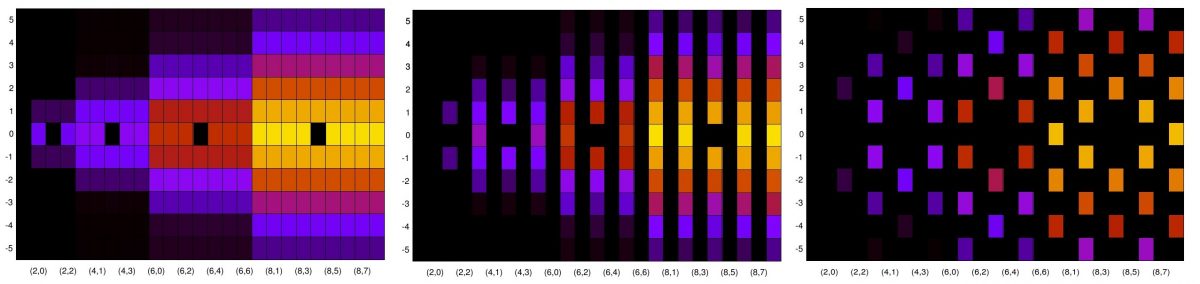
Well, can it? I mean, can it REALLY? Or just approximately?
Update: See Part 2 of this post at this link. If you want to leave on comment, leave it on Part 2. Comments closed on this Part 1 post.
Continue reading “Can a Machine Learn the Fourier Transform?”
Welcome to the CSP Blog!
To help new readers, I’m supplying here links to the posts that have gotten the most attention over the lifetime of the Blog. Omitted from this list are the more esoteric topics as well as most of the posts that comment on the engineering literature.
Click the button below to follow the CSP Blog:
Follow Cyclostationary Signal Processing on WordPress.com
Use this button to donate to the CSP Blog:

Support the CSP Blog and Keep it Ad-Free
Please consider donating to the CSP Blog to keep it ad-free and to support the addition of major new features. The small box below is used to specify the number of $5 donations.
$5.00
You can see a pre-publication version of my latest CSP journal paper, on “tunneling”, here.
Here are some highlights:
Radio-frequency scene analysis is much more complex than modulation recognition. A good first step is to blindly identify the frequency intervals for which significant non-noise energy exists.
In this post, I discuss a signal-processing algorithm that has almost nothing to do with cyclostationary signal processing (CSP). Almost. The topic is automatic spectral segmentation, which I also call band-of-interest (BOI) detection. When attempting to perform automatic radio-frequency scene analysis (RFSA), we may be confronted with a data block that contains multiple signals in a number of distinct frequency subbands. Moreover, these signals may be turning on and off within the data block. To apply our cyclostationary signal processing tools effectively, we would like to isolate these signals in time and frequency to the greatest extent possible using linear time-invariant filtering (for separating in the frequency dimension) and time-gating (for separating in the time dimension). Then the isolated signal components can be processed serially using CSP.
It is very important to remember that even perfect spectral and temporal segmentation will not solve the cochannel-signal problem. It is perfectly possible that an isolated subband will contain more than one cochannel signal.
The basics of my BOI-detection approach are published in a 2007 conference paper (My Papers [32]). I’ll describe this basic approach, illustrate it with examples relevant to RFSA, and also provide a few extensions of interest, including one that relates to cyclostationary signal processing.
The CSP Blog has been getting lots of new visitors these past few months; welcome to all!
If you want to receive an email each time I publish a new post, look for the Follow Blog via Email widget on the right side of the Blog and enter an email address.
Continue reading “Blog Notes and How to Obtain Help with Your CSP Work”
Gaussian and binary signals are in some sense at opposite ends of the pure-impure sine-wave spectrum.
Remember when we derived the cumulant as the solution to the pure 
Spread-spectrum signals are used to enable shared-bandwidth communication systems (CDMA), precision position estimation (GPS), and secure wireless data transmission.
In this post we look at direct-sequence spread-spectrum (DSSS) signals, which can be usefully modeled as a kind of PSK signal. DSSS signals are used in a variety of real-world situations, including the familiar CDMA and WCDMA signals, covert signaling, and GPS. My colleague Antonio Napolitano has done some work on a large class of DSSS signals (The Literature [R11, R17, R95]), resulting in formulas for their spectral correlation functions, and I’ve made some remarks about their cyclostationary properties myself here and there (My Papers [16]).
A good thing, from the point of view of modulation recognition, about DSSS signals is that they are easily distinguished from other PSK and QAM signals by their spectral correlation functions. Whereas most PSK/QAM signals have only a single non-conjugate cycle frequency, and no conjugate cycle frequencies, DSSS signals have many non-conjugate cycle frequencies and in some cases also have many conjugate cycle frequencies.
Continue reading “Cyclostationarity of Direct-Sequence Spread-Spectrum Signals”
Let’s talk about another published paper on signal detection involving cyclostationarity and/or cumulants. This one is called “Energy-Efficient Processor for Blind Signal Classification in Cognitive Radio Networks,” (The Literature [R69]), and is authored by UCLA researchers E. Rebeiz and four colleagues.
My focus on this paper is its idea that broad signal-type classes, such as direct-sequence spread-spectrum (DSSS), QAM, and OFDM can be reliably distinguished by the use of a single number: the fourth-order cumulant with two conjugated terms. This kind of cumulant is referred to as the 


Update October 2020:
Since I wrote the paper review in this post, I’ve analyzed three of O’Shea’s data sets (O’Shea is with the company DeepSig, so I’ve been referring to the data sets as DeepSig’s in other posts): All BPSK Signals, More on DeepSig’s Data Sets, and DeepSig’s 2018 Data Set. The data set relating to this paper is analyzed in All BPSK Signals. Preview: It is heavily flawed.
Modulation recognition is the process of assigning one or more modulation-class labels to a provided time-series data sequence.
In this post, we start a discussion of what I consider the ultimate application of the theory of cyclostationary signals: Automatic Modulation Recognition. My relevant papers are My Papers [16,17,25,26,28,30,32,33,38,43,44,50-52,54-56,58-59]. See also my machine-learning modulation-recognition critiques by clicking on Machine Learning in the CSP Blog Categories on the right side of any post or page.
We are all susceptible to using bad mathematics to get us where we want to go. Here is an example.
I recently came across the 2014 paper in the title of this post. I mentioned it briefly in the post on the periodogram. But I’m going to talk about it a bit more here because this is the kind of thing that makes things harder for people trying to learn about cyclostationarity, which eventually leads to the need for something like the CSP Blog as a corrective.
The idea behind the paper is that it would be nice to avoid the need for prior knowledge of cycle frequencies when using cycle detectors or the like. If you could just compute the entire spectral correlation function, then collapse it by integrating (summing) over frequency 

The periodogram is the scaled magnitude-squared finite-time Fourier transform of something. It is as random as its input–it never converges to the power spectrum.
I’ve been reviewing a lot of technical papers lately and I’m noticing that it is becoming common to assert that the limiting form of the periodogram is the power spectral density or that the limiting form of the cyclic periodogram is the spectral correlation function. This isn’t true. These functions do not become, in general, less random (erratic) as the amount of data that is processed increases without limit. On the contrary, they always have large variance. Some form of averaging (temporal or spectral) is needed to permit the periodogram to converge to the power spectrum or the cyclic periodogram to converge to the spectral correlation function (SCF).
In particular, I’ve been seeing things like this:
where 

![t \in [-T/2, T/2]](https://s0.wp.com/latex.php?latex=t+%5Cin+%5B-T%2F2%2C+T%2F2%5D&bg=ffffff&fg=1a1a1a&s=0&c=20201002)
Higher-order statistics in the frequency domain for cyclostationary signals. As complicated as it gets at the CSP Blog.
In this post we take a first look at the spectral parameters of higher-order cyclostationarity (HOCS). In previous posts, I have introduced the topic of HOCS and have looked at the temporal parameters, such as cyclic cumulants and cyclic moments. Those temporal parameters have proven useful in modulation classification and parameter estimation settings, and will likely be an important part of my ultimate radio-frequency scene analyzer.
The spectral parameters of HOCS have not proven to be as useful as the temporal parameters unless you include the trivial case where the moment/cumulant order is equal to two. In that case, the spectral parameters reduce to the spectral correlation function, which is extremely useful in CSP (see the TDOA and signal-detection posts for examples).
Update: See also some other reviews/take-downs of cyclic correntropy on the CSP Blog here and here.
I recently came across a published paper with the title Cyclostationary Correntropy: Definition and Application, by Aluisio Fontes et al. It is published in a journal called Expert Systems with Applications (Elsevier). Actually, it wasn’t the first time I’d seen this work by these authors. I had reviewed a similar paper in 2015 for a different journal.
I was surprised to see the paper published because I had a lot of criticisms of the original paper, and the other reviewers agreed since the paper was rejected. So I did my job, as did the other reviewers, and we tried to keep a flawed paper from entering the literature, where it would stay forever causing problems for readers.
The editor(s) of the journal Expert Systems with Applications did not ask me to review the paper, so I couldn’t give them the benefit of the work I already put into the manuscript, and apparently the editor(s) did not themselves see sufficient flaws in the paper to merit rejection.
It stings, of course, when you submit a paper that you think is good, and it is rejected. But it also stings when a paper you’ve carefully reviewed, and rejected, is published anyway.
Fortunately I have the CSP Blog, so I’m going on another rant. After all, I already did this the conventional rant-free way.
The CSP Blog has been up for about a year, and September 2016 was its best month: record numbers of visitors, page views, and views per visitor. Thanks to all of my readers!

I came across a paper by Cohen and Eldar, researchers at the Technion in Israel. You can get the paper on the Arxiv site here. The title is “Sub-Nyquist Cyclostationary Detection for Cognitive Radio,” and the setting is spectrum sensing for cognitive radio. I have a question about the paper that I’ll ask below.
PSK and QAM signals form the building blocks for a large number of practical real-world signals. Understanding their probability structure is crucial to understanding those more complicated signals.
Let’s look into the statistical properties of a class of textbook signals that encompasses digital quadrature amplitude modulation (QAM), phase-shift keying (PSK), and pulse-amplitude modulation (PAM). I’ll call the class simply digital QAM (DQAM), and all of its members have an analytical-signal mathematical representation of the form
In this model, 


Model (1) is a textbook signal when the sequence of symbols is independent and identically distributed (IID). This condition rules out real-world communication aids such as periodically transmitted bursts of known symbols, adaptive modulation (where the constellation may change in response to the vagaries of the propagation channel), some forms of coding, etc. Also, when the pulse function 
We will look at the moments and cumulants of this general model in this post. Although the model is textbook, we could use it as a building block to form more realistic, less textbooky, signal models. Then we could find the cyclostationarity of those models by applying signal-processing transformation rules that define how the cumulants of the output of a signal processor relate to those for the input.
How does the cyclostationarity of a signal change when it is subjected to common signal-processing operations like addition, multiplication, and convolution?
It is often useful to know how a signal processing operation affects the probabilistic parameters of a random signal. For example, if I know the power spectral density (PSD) of some signal 

In (1), the function 
Because the mathematical models of real-world communication signals can be constructed by subjecting idealized textbook signals to various signal-processing operations, such as filtering, it is of interest to us here at the CSP Blog to know how the spectral correlation function of the output of a signal processor is related to the spectral correlation function for the input. Similarly, we’d like to know such input-output relationships for the cyclic cumulants and the cyclic polyspectra.
Another benefit of knowing these CSP input-output relationships is that they tend to build insight into the meaning of the probabilistic parameters. For example, in the PSD input-output relationship (1), we already know that the transfer function at 

So, let’s look at this kind of relationship for CSP parameters. All of these results can be found, usually with more mathematical detail, in My Papers [6, 13].
CSP shines when the problem involves strong noise or cochannel interference. Here we look at CSP-based signal-presence detection as a function of SNR and SIR.
Let’s take a look at a class of signal-presence detectors that exploit cyclostationarity and in doing so illustrate the good things that can happen with CSP whenever cochannel interference is present, or noise models deviate from simple additive white Gaussian noise (AWGN). I’m referring to the cycle detectors, the first CSP algorithms I ever studied (My Papers [1,4]).
Modulation recognition is one thing, holistic radio-frequency scene analysis is quite another.
Update October 2023: RFSA is a Wicked Problem.
So why do I obsess over cyclostationary signals and cyclostationary signal processing? What’s the big deal, in the end? In this post I discuss my view of the ultimate use of cyclostationary signal processing (CSP): Radio-Frequency Scene Analysis (RFSA). Eventually, I hope to create a kind of Star Trek Tricorder for RFSA.
Time-delay estimation can be used to determine the angle-of-arrival of a signal impinging on two spatially separated signals. This estimation problem gets hard when there is cochannel interference present.
Let’s discuss an application of cyclostationary signal processing (CSP): time-delay estimation. The idea is that sampled data is available from two antennas (sensors), and there is a common signal component in each data set. The signal component in one data set is the time-delayed or time-advanced version of the component in the other set. This can happen when a plane-wave radio frequency (RF) signal propagates and impinges on the two antennas. In such a case, the RF signal arrives at the sensors with a time difference proportional to the distance between the sensors along the direction of propagation, and so the time-delay estimation is also commonly referred to as time-difference-of-arrival (TDOA) estimation.

Consider the diagram shown in Figure 1. A distant transmitter emits a signal that is well-modeled as a plane wave once it reaches our two receivers. An individual wavefront of the signal arrives at the two sensors at different times.
The line segment AB is perpendicular to the direction of propagation for the RF signal. The angle 
When 


In general, the wavefront must traverse 
Assuming the speed of propagation is 
In this post I’ll review several methods of TDOA estimation, some of which employ CSP and some of which do not. We’ll see some of the advantages and disadvantages of the various classes of methods through inspection, simulation, and application to captured data. Consider this post as a starting point to a study or development effort rather than as a definitive performance characterization.
Continue reading “CSP-Based Time-Difference-of-Arrival Estimation”





